
GovAuctions.com - Shop Surplus
Auctions LLCShopping
4.84.36K Reviews
- Version
- 7.36.5
- Installs
- 1.00M
- Age Rating
- Everyone
Screenshots
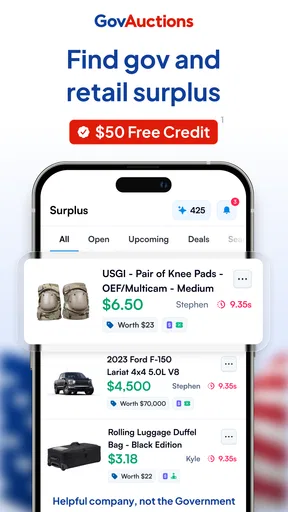
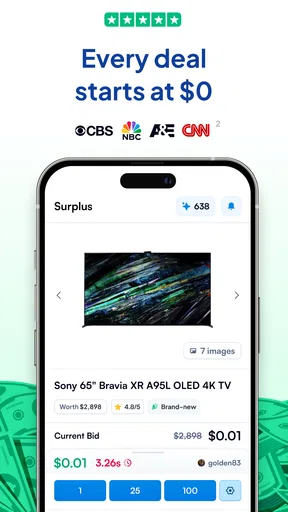
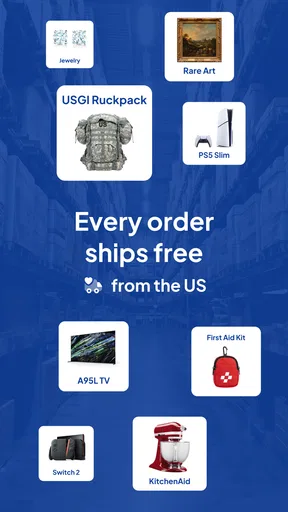
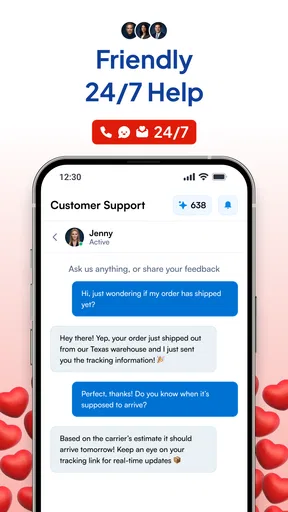
Our Review of GovAuctions.com - Shop Surplus
 Analysis by Appyee
I tested GovAuctions.com - Shop Surplus as a shopping app built around one clear idea: helping people discover government and retail surplus in one place. That focus makes it different from a normal marketplace, where I usually begin with a familiar product and compare identical offers. Here, the more interesting part is browsing what is available, deciding whether an unusual listing is worth the effort, and saving possibilities before they disappear from my attention.
The app is free, aimed at everyone, and developed by Auctions LLC. It has reached more than 500 thousand installs, with an average rating of 4.8 from roughly 16 thousand ratings and about 2.2 thousand written reviews. Those figures suggest that the concept has found a receptive audience, but they do not change the practical question I had while using it: can a surplus-shopping workflow actually be more useful than simply searching a large retail store?
My answer is yes, but only for the right kind of shopper. This is not the app I would open when I need a specific replacement cable tonight. I found it more appealing when I had time to explore, compare condition and quantity, and think through the total effort involved in acquiring something that may be less predictable than a standard retail purchase.
Why the surplus-discovery approach matters
The central capability is not just showing products. It is giving me a way to look for government surplus and retail surplus without starting from a single brand or a conventional shopping aisle. That changes how I browse. Instead of asking, “Which store has the exact item I already want?” I can ask, “What useful item might be available if I am flexible?”
That difference sounds small, but it affects the whole experience. A conventional shopping app rewards precision: type a product name, filter by familiar specifications, and select a listing that promises a predictable result. GovAuctions.com is more rewarding when I treat it as a discovery tool. I may begin with a broad need, such as workshop equipment, office furniture, tools, or miscellaneous household goods, and then inspect what appears rather than expecting a perfectly standardized catalog.
I especially liked the possibility of saving interesting finds instead of making an immediate decision. Surplus shopping often involves hesitation. An item may look useful, but the condition, quantity, or practical pickup details can make the difference between a bargain and a bad purchase. Saving a listing gives me a chance to compare it against other finds, discuss it with someone else, or return after thinking about the total commitment.
The strongest part of the app is the shift from product hunting to opportunity hunting. That is also its main limitation. If you dislike browsing uncertain or changing inventory, the same capability can feel unfocused. The app is most effective when curiosity is part of your shopping style.
What I looked for while browsing
I paid attention to whether the app helped me make a sensible decision, not merely whether it displayed attractive listings. With surplus, the headline item is only the starting point. I need to consider whether the object fits my actual need, whether its condition is acceptable, whether I can handle its size or quantity, and whether the saving remains worthwhile after the extra work involved.
This makes the app useful for people who are comfortable reading carefully and resisting impulse decisions. A photograph can make a lot look exciting, but a large lot may be excessive for one household. A low-looking opportunity may also require transport, storage, cleaning, repair, or patience. I found that the app encouraged a more investigative mindset than ordinary retail browsing, even when that made the process slower.
One practical habit helped me: I separated “interesting” from “actionable.” I saved unusual items because they might be useful later, but I only treated a listing as a serious candidate after checking whether it matched a real need. That small distinction prevents the discovery aspect from turning into an endless wish list.
How the workflow feels in everyday use
My normal session began with browsing rather than a tightly defined search. I would scan available surplus, pause at listings that matched something I needed, and then compare the likely value with the effort required. The app works best in short, repeatable sessions: a few minutes while planning a home project, then another look later when I am ready to make a decision.
The saving function is particularly useful in this kind of workflow. I used it as a temporary research shelf rather than a promise to buy. That gave me a way to group possibilities mentally: items for a current project, items worth watching, and items that were simply interesting. This is a more realistic use of surplus shopping than assuming every attractive listing should lead directly to a purchase.
A realistic example would be someone setting up a small workshop. In a normal retail app, that person might search separately for a workbench, storage, tools, and lighting, then compare new products with standardized descriptions. With this app, the same person could browse surplus opportunities and save several candidates. The possible benefit is finding a combination that costs less or offers more capacity. The trade-off is that the person must inspect each opportunity carefully and be prepared for mismatched quantities or condition.
That scenario also shows why I would not use this as my only shopping app. If I need a precise size, a guaranteed color, a known warranty, or delivery on a particular day, a conventional retailer is usually the safer choice. GovAuctions.com is better as a second channel: I check it when flexibility could produce a worthwhile result.
A smarter way to use saved listings
I recommend treating saved items as a comparison board, not a collection of impulses. For each item, I would note the actual purpose, the maximum amount of work I am willing to accept, and whether I have a realistic way to transport or store it. This is especially important for surplus because the apparent purchase value can hide practical costs.
Another useful approach is to decide your stopping rule before browsing. For example, I might save only items that solve a current problem or support a project I have already planned. Without that rule, the app’s discovery strength can become a distraction. I found that the best results came when I opened it with a question in mind, even if the question was broad.
I also avoided judging an item from a single appealing detail. A recognizable brand, a large quantity, or a low apparent cost is not enough by itself. I looked at the entire listing context and asked whether I would still want the item if it required extra sorting, cleaning, or coordination. That mental check is one of the most important skills for using this app well.
The best scenario for GovAuctions.com
The app makes the most sense for a flexible shopper who enjoys finding practical value in unexpected places. I can see it working well for people furnishing a workspace, preparing for a renovation, looking for equipment for a hobby, or sourcing several related items without insisting that every piece match perfectly.
It may also suit experienced bargain hunters who already understand the difference between an attractive listing and a genuinely useful purchase. Those users are more likely to appreciate the browsing process and less likely to assume that surplus automatically means cheap or convenient.
For a household project, I would use it during the planning stage rather than at the last minute. Suppose I wanted storage for a garage. I could browse and save several possibilities, then measure the available space, decide what size and quantity make sense, and compare the effort against buying new shelving from a standard retailer. If a suitable surplus option appears, the app may open a better value path. If not, I have lost little time and can return to the ordinary retail option.
The same method works for small organizations or clubs that need several functional items but do not require a perfectly coordinated appearance. A flexible buyer may gain more from a useful lot than from purchasing individual new products. However, the person responsible for buying should be comfortable making decisions from listing details rather than relying on the uniform specifications common in mainstream shopping apps.
When I would choose another shopping option
I would skip this app when certainty matters more than discovery. That includes urgent purchases, gifts with a specific presentation, replacement parts that must match exactly, and items where condition has a major effect on safety or performance. In those cases, a retailer with standardized inventory is more convenient because I can compare like with like.
I would also be cautious if I had very limited storage or transport. A surplus opportunity can be attractive in isolation but impractical when the item is bulky, sold in a quantity larger than needed, or requires immediate planning. The app cannot remove those physical realities. It can help me find an opportunity, but I still have to make the opportunity fit my life.
People who prefer a simple, linear shopping experience may find the browsing style tiring. The usual retail pattern is reassuring: search, select, pay, and wait. This app asks for more judgment before I even know whether a listing is worth pursuing. That is not a flaw for everyone, but it is a real trade-off.
The trade-offs behind the bargain
The biggest trade-off is convenience versus potential value. Surplus can reward patience, but it is rarely as frictionless as buying a new, standardized product. I had to spend more mental energy evaluating whether an item made sense. That extra effort is the price of access to less conventional opportunities.
Another trade-off is certainty versus variety. A regular shopping catalog is easier to predict because products are presented in a familiar format and often have clear alternatives. A surplus-focused app is more interesting precisely because the selection can feel less routine. The downside is that I cannot build my entire plan around finding one exact item at one exact moment.
There is also a difference between saving money and spending less overall effort. Even if a surplus item looks financially attractive, I would factor in time spent researching, arranging transport, organizing a lot, or preparing the item for use. That does not make the app poor value; it means the value calculation must include more than the listing itself.
My advice is to create a personal ceiling for inconvenience. If I am willing to clean, repair, collect, or sort an item, I can consider more opportunities. If I want something ready to use, I should be stricter. This simple rule keeps the app from persuading me into purchases that are technically bargains but practically unsuitable.
What the app does well and where patience is required
It does well at encouraging exploration and giving saved discoveries a place in my shopping process. The free price also makes it easy to add the app to a broader bargain-hunting routine rather than treating it as a major commitment. Its Everyone content rating makes it approachable for a general audience, although the responsibility for evaluating a purchase still belongs with the individual shopper.
Patience is required because the app’s value depends on how thoughtfully I use it. I would not open it expecting every session to produce a purchase. Some sessions are better viewed as research: I learn what kinds of surplus appeal to me, which categories create too much hassle, and what details I need to verify before acting.
The current version is 7.13.16, and the app supports Android seven point zero or later. That makes it accessible on a broad range of Android devices, including older phones that are still perfectly usable for shopping. I would still keep the app updated when possible, because shopping tools benefit from current compatibility and interface improvements, but I would not expect the minimum operating-system requirement to exclude many everyday Android users.
Who gets the most value from it
I would recommend GovAuctions.com - Shop Surplus to people who enjoy practical discovery, have flexible requirements, and are willing to inspect an opportunity before committing. DIY users, workshop owners, hobbyists, organizers, and bargain hunters are the clearest audience for me. They can turn an unusual listing into real value because they are prepared to adapt.
I would also suggest it to anyone who wants a second opinion before buying new. The app does not need to replace a normal retailer to be useful. I can check surplus first for a project, then buy new if the available options do not meet my needs. That order makes sense when I have time and when the item does not require exact specifications.
I would not recommend relying on it alone if your priority is speed, consistency, or a guaranteed match. A person furnishing a room with coordinated products, replacing a critical component, or shopping under a strict deadline will probably have a smoother experience elsewhere. The app rewards flexibility, and without flexibility its main advantage becomes much smaller.
After using it, I see the product as a focused companion for value-oriented shopping rather than a universal marketplace replacement. Its best capability is the way it turns surplus browsing into a repeatable discovery process: I can explore, save, compare, and decide whether an opportunity deserves real effort. That process will not suit everyone, but for me it made sense whenever the goal was to find something useful without limiting the search to ordinary retail shelves.
My final recommendation is straightforward: install it if you enjoy the possibility of an unexpected find and can judge value beyond the initial price. Keep a conventional shopping app available for exact, urgent, or highly predictable purchases. Used with that expectation, this free shopping app from Auctions LLC can add a genuinely different route to government and retail surplus, without pretending that every bargain is automatically convenient.
Privacy and Permissions
See what permissions an app requests and how it handles your data.
- Photos/Media/Files
- read the contents of your USB storage, modify or delete the contents of your USB storage
- Storage
- read the contents of your USB storage, modify or delete the contents of your USB storage
- Camera
- take pictures and videos
- Microphone
- record audio
- Wi-Fi connection information
- view Wi-Fi connections
- Other
- view network connections, full network access, change your audio settings, run at startup, draw over other apps, control vibration, prevent device from sleeping, Google Play license check
Verdict
Strengths of GovAuctions.com - Shop Surplus
- Access to surplus listings from government agencies in one place.
- Useful filters help narrow results by category, location, and auction status.
- Listings may include vehicles, equipment, property, and other unusual items.
- Auction details can help buyers compare estimated values and bidding information.
- Convenient mobile access to browse auctions while away from a computer.
Limitations of GovAuctions.com - Shop Surplus
- Availability and selection can vary significantly by location and auction schedule.
- Some listings may have limited photos or incomplete item descriptions.
- Winning bids may involve buyer premiums, taxes, shipping, or pickup fees.
- Inspection options and return policies can differ between individual auctions.
- Bidding requires careful research because surplus items may be sold as-is.
Similar Picks in This Category
View All
SHEIN-Shopping Online
Roadget Business PTE. LTD.4.8

Amazon Shopping
Amazon Mobile LLC4.4


Mercado Libre: Compras online
Mercado Libre4.8

Wish: Shop and Save
Wish US Holdings LLC4.7

Alibaba.com - B2B marketplace
Alibaba Mobile4.4
Frequently Asked Questions
What is GovAuctions.com - Shop Surplus?
GovAuctions.com - Shop Surplus is a marketplace-style app for browsing surplus items offered through government, municipal, and other public-sector auctions. After reviewing the app, its main purpose appears to be helping users discover available lots, inspect listing details, and follow the process for participating in auctions. Inventory can vary considerably, so users may find vehicles, equipment, electronics, tools, property-related items, and other surplus goods depending on current listings and location.
Can I buy items directly through the GovAuctions.com app?
The app is primarily designed for discovering and reviewing surplus auction listings rather than functioning like a conventional online store with fixed prices and immediate checkout. Depending on the item and auction rules, you may need to register, place bids through the appropriate auction process, and complete payment separately if you win. Always read the listing terms, buyer fees, payment deadlines, and pickup instructions before bidding.
Is GovAuctions.com - Shop Surplus safe and legitimate to use?
The app can be useful for finding public-sector surplus opportunities, but users should still verify every listing and transaction carefully. Auction platforms may include buyer premiums, taxes, service charges, deposits, and strict collection policies. Before submitting personal information or a bid, confirm that you are using the official app or website, review the seller and auction details, and avoid making payments outside the approved process.
What should I check before bidding on an item?
You should examine the complete listing, photographs, description, condition notes, location, inspection options, and any known defects before placing a bid. Many surplus items are sold as-is, which can mean limited warranties, missing accessories, mechanical problems, or cosmetic damage. Also calculate transportation, storage, taxes, buyer premiums, and possible repair costs, because the final expense can be much higher than the winning bid alone.
Does the app support notifications and account management?
GovAuctions.com - Shop Surplus may provide account-related tools and alerts that help users keep track of listings, auction activity, or relevant updates, although the exact options can depend on the current app version and the auction provider. If you plan to participate regularly, review notification permissions, keep your contact details accurate, and check your account frequently so you do not miss closing times, payment instructions, or pickup deadlines.
